
Design
Art & Design – Highlights from the second edition of Design Café
What happens when art steps out of the gallery and into everyday life – into our interiors, functional objects, urban spaces? This was the central question we explored during the panel “Art & Design: design for social value and art in design”, which opened the latest edition of our Design Café series for designers and architects. “We’ll be talking about the intersection of art, architecture and design – and reflecting on what we can learn from these crossovers today,” said Artur Celiński, Editor-in-Chief of “Architektura-Murator”, as he kicked off the March edition of Design Café.

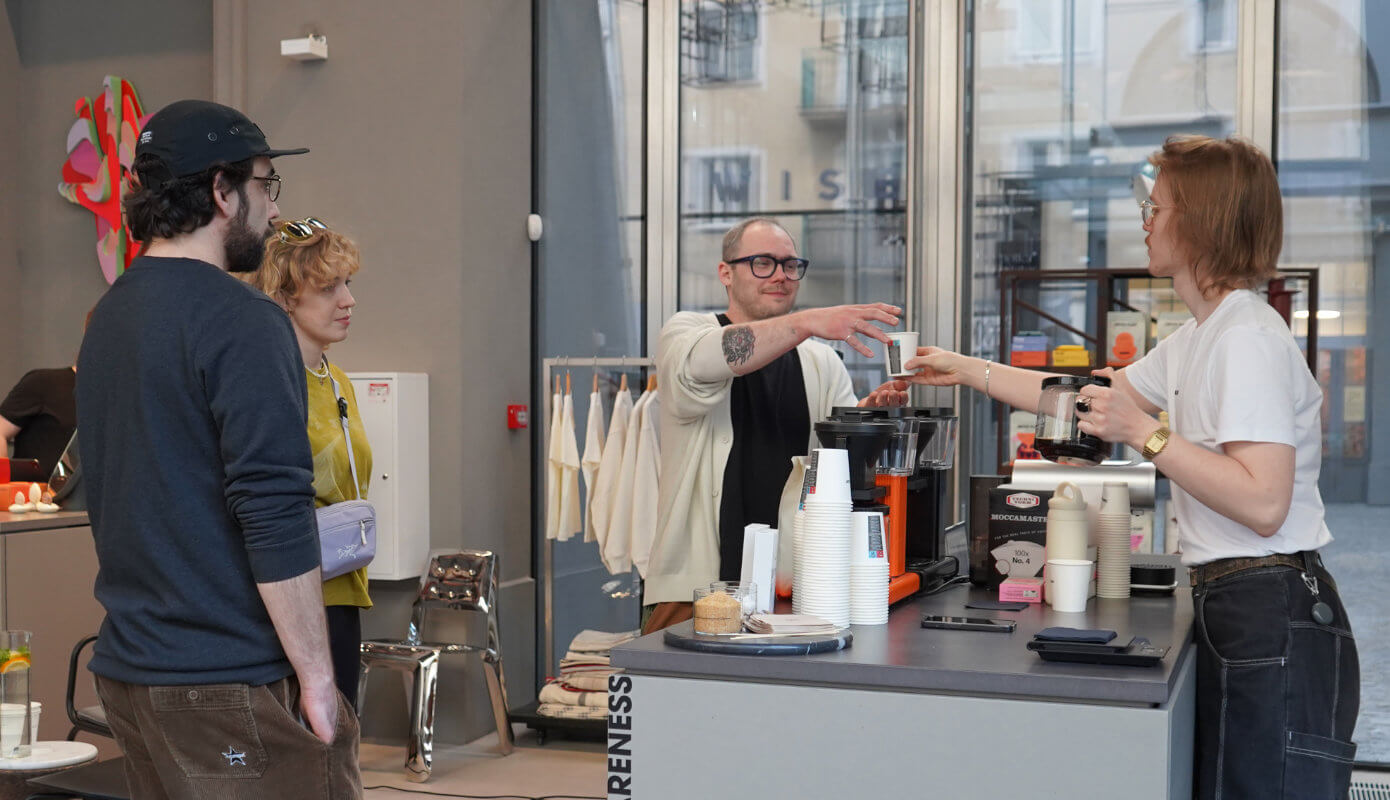
This ongoing event series is designed for the design community, blending expert talks, exchange of insights and networking over coffee. We organize in collaboration with "Architektura-Murator", turning the Wise Habit space into a forum for meaningful conversations on design that responds to the challenges of the future – with empathy, responsibility and openness.
A collage of perspectives
When art is integrated into architecture and design, it transforms everyday objects and spaces – not just visually, but also culturally and socially. To shed light on this multidimensional topic, we invited a creative and interdisciplinary panel: an architect, an artist, a creative director, a journalist, and an entrepreneur from the design world.
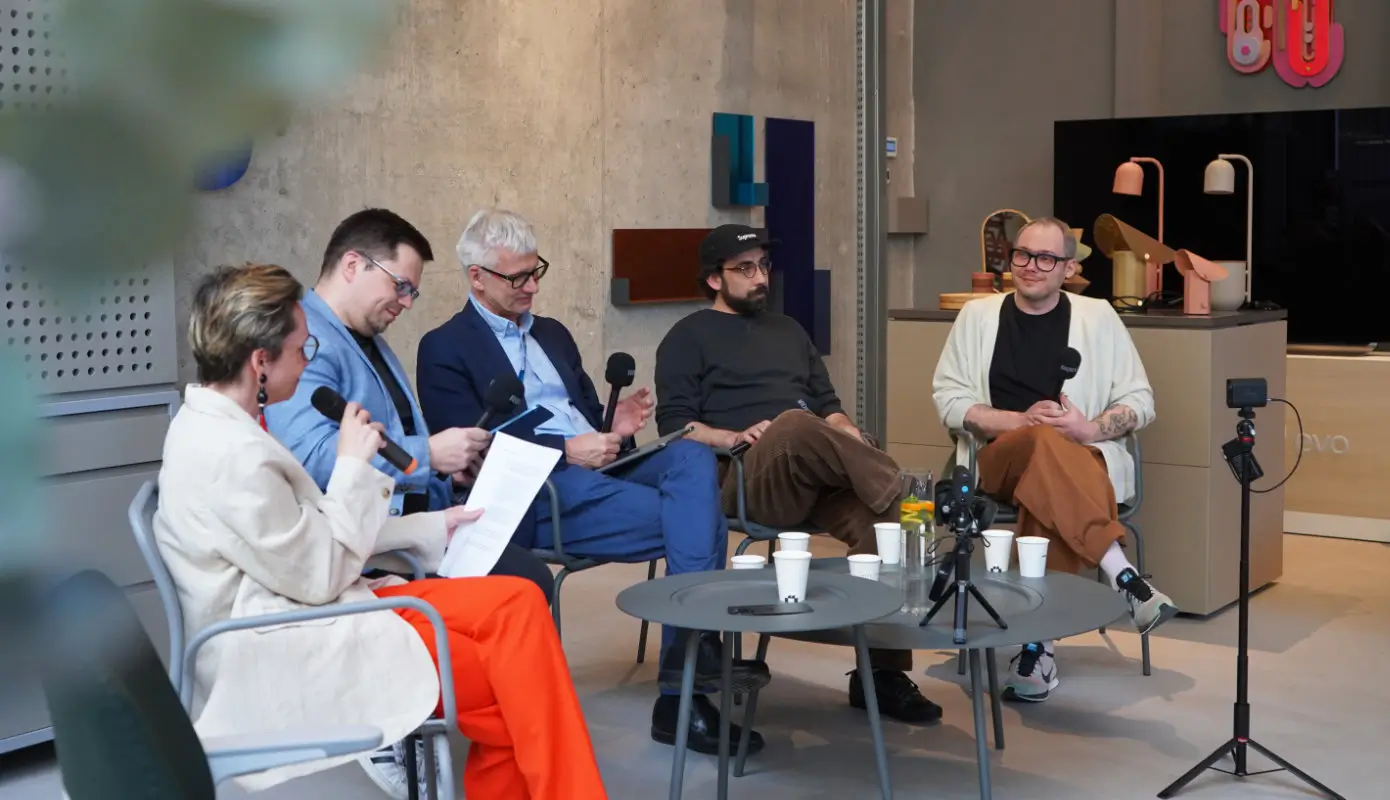
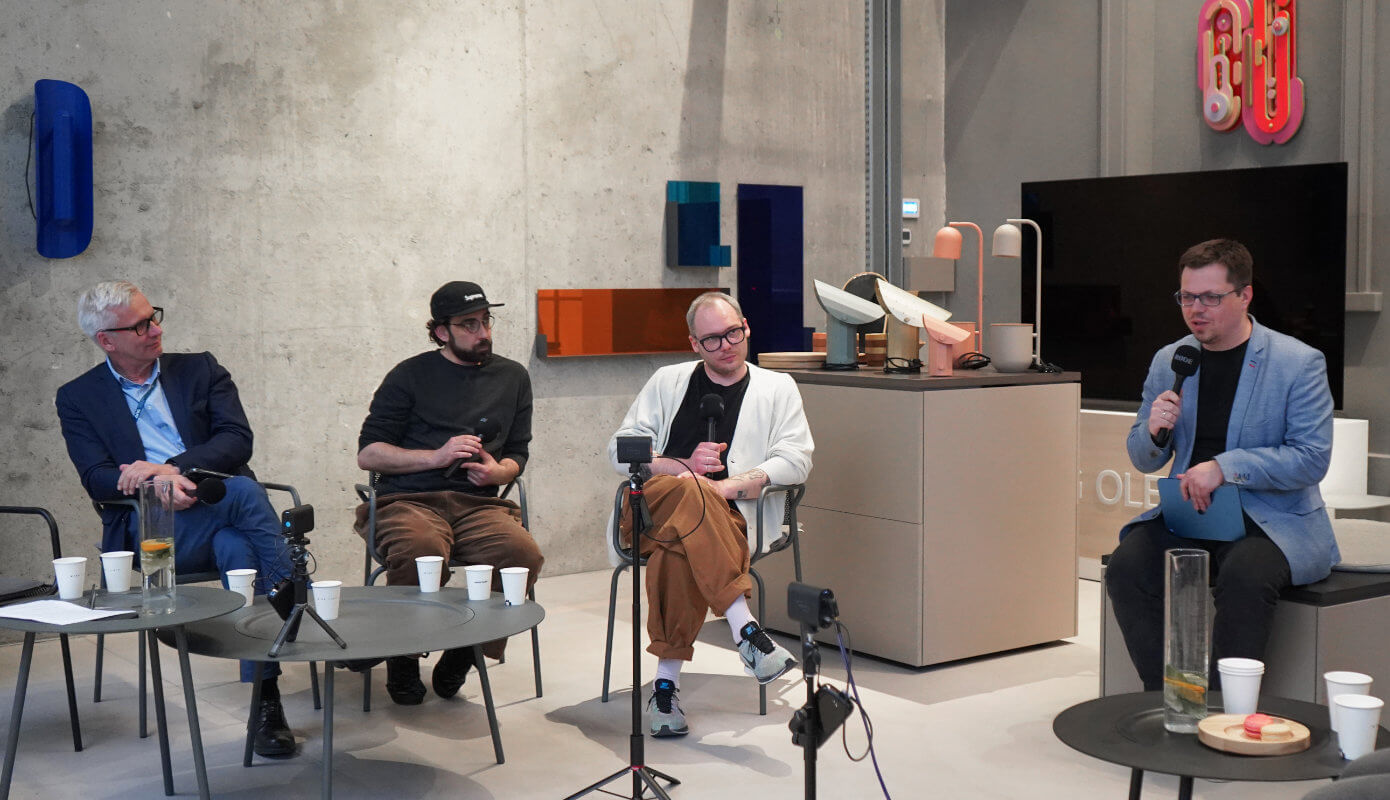
Szymon Wojciechowski, co-founder of APA Wojciechowski Architekci and a member of the Mazovian District Chamber of Architects, brought over four decades of experience to the conversation. He shared his vision of responsible architecture, shaped in part through his work as a local partner of Thomas Phifer and Partners on the Museum of Modern Art in Warsaw. Arkadiusz Szwed, Artistic Director of Glitch Lab and Head of the Ceramics Studio at School of Form, offered the perspective of a maker who hacks processes, challenges norms and navigates the borders between art, craft and design. Tytus Klepacz, Creative Director and Partner at the agency Here Comes the Sun, enriched the conversation with insights from the world of communication and advertising, while also drawing on his curatorial experience as co-owner of Lotna contemporary art gallery and as a collector of Polish posters and avant-garde lithographs.
The panel discussion was co-hosted – and actively moderated – by Artur Celiński, who steered the conversation toward topics of urban space and the democratization of art, and Marcelina Plichta-Wabnik, CEO of Wise Habit, who filtered the topics through her experience as the founder of a sustainable design agency.
Between art and design
We began our conversation by trying to define the playing field – what are we really talking about when we talk about design, art, craft or architecture?
As Arkadiusz Szwed pointed out, the boundaries between these disciplines are becoming increasingly fluid. "Design has as many definitions as there are people discussing it," he noted. Art, meanwhile, has acquired a paradoxical status: "Since the avant-garde, everything is art – and at the same time, nothing is." Yet one key differentiator remains: scale. "If an object exists only as a single piece, it leans more toward art than its mass-produced counterpart. A one-off or a limited series lives in the realm of art."
Szymon Wojciechowski added that these practices exist on a continuum. "Construction, architecture, design and art have been interconnected since the cave paintings in Lascaux. That was a dwelling, decorated with what we now call art. Whether it qualifies as art is a matter of perspective, time and distance from current trends. But the root is timeless – the human need to surround ourselves with what is good."
Tytus Klepacz observed that while public spaces are increasingly filled with art, it often plays the role of a decorative status symbol. "What we actually need more of is thoughtful design solutions that make our lives easier in real, tangible ways. It's these solutions that give us the time to engage with art. Art requires time – and good design gives it to us." When asked to draw the line between the two, he said, "Art is about emotion. Design – like in Tomaszewski's posters – is that emotion distilled down to pure functionality."
Marcelina Plichta-Wabnik offered a broader lens: "Almost everything around us is designed interiors, objects, games, logos, communication. It all comes out of a design process. So when does it become art? That's a personal matter. For me, design is about solving problems. Art is about sparking inspiration. But both can evoke emotion. Some of the products in our portfolio are based on forms that have accompanied humans for thousands of years – for a reason. They're meant to stir emotion and a sense of belonging."
From museums to the cityscapes
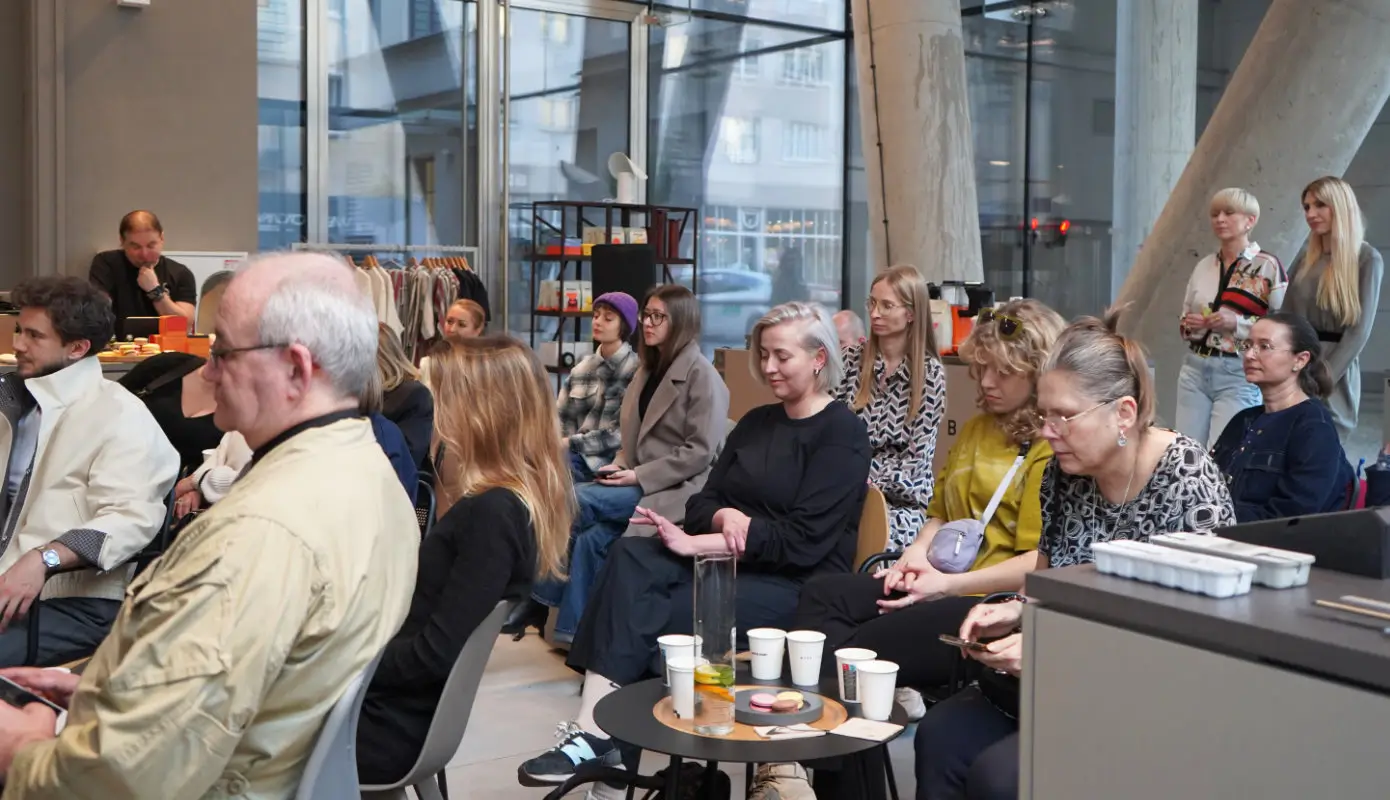
The conversation then moved into the public space. As Artur Celiński pointed out, architecture itself can be a form of art. But unlike art in museums, it often reaches an unprepared audience – not due to a lack of knowledge or appreciation, but simply a lack of time. Can a commuter rushing to work in the morning truly notice and value the urban art they pass by?
We agreed: yes – if functionality meets emotion. Szymon Wojciechowski emphasized that this is a democratized process: "We vote with our feet for well-designed places – we simply enjoy spending time in them." He also noted a more controversial metric of popularity: "Instagram has become a cruel measuring stick," he said. Urban spaces are now analyzed based on how often they appear in photos. This raises a deeper question: Should we design cities around such photogenic hotspots? And what is the future of architecture – as spatial art – if it's to be judged through a medium that flattens its third dimension?
Celiński added that this isn't just a hypothetical dilemma. Danish architecture studio Henning Larsen, for instance, already uses AI to analyze social media data and photos taken in public spaces to inform future designs. While the goal is to democratize design by engaging communities, it also opens up ethical and aesthetic concerns – algorithms risk reinforcing existing visual trends and transferring digital "filter bubbles" into the real world.
Instead of chasing the next "wow" effect, we decided to refocus on how to weave art into the more modest corners of everyday life. We searched for examples beyond city centers and tourist routes – from Rome's Trastevere, with its hidden fountains as impressive as but less crowded than di Trevi, to Warsaw's Międzynarodowa Street, where outdoor sculptures tucked between apartment blocks hint at a 1970s vision of "humanizing urban space" that was never fully realized.
As Arkadiusz Szwed summed it up: "Thinking about a street or neighborhood is really thinking about your favorite bench or path – you should feel comfortable, safe and like it's yours. And when something feels like it's yours, you naturally care for it more."
Project: participation
A sense of belonging is just one step away from engagement – and that, we agreed, is a core value in designing with art in mind.
The panel shared a strong consensus: the most important thing is to leave room for initiative, interaction and integration. Only then can the spaces and objects we design become resilient – anti-fragile and lasting.
Szymon Wojciechowski pointed to Riverview in Gdańsk as an example of such architecture – a sustainable residential complex with a communal space separated from the street, even closed to bike traffic, but still open to the city. Sculptures created by students from the local Academy of Fine Arts, inspired by the movement of water and the proximity of the sea, are integrated into the area. The space follows natural walking routes and is fully accessible to local residents in their daily lives.
Arkadiusz Szwed, Artur Celiński and Tytus Klepacz turned the spotlight on the expressive power of graffiti, murals and billboards.
Celiński noted that large-scale murals are one of the most widespread forms of artistic expression in public space: "Murals can shape the identity of entire neighborhoods – like Gdańsk's Zaspa district, home to the Monumental Art Collection. Increasingly, they're also becoming tools of social policy: we see murals with revitalizing, educational and informational purposes."
Tytus Klepacz recalled the work of Grupa Ładnie from Kraków and Galeria Rusz from Toruń, both of which transformed billboards from ad spaces into artistic media. He offered a distinction: "It's one thing to design a space with a mural in mind and hand it over to an artist to create something meaningful. It's another when we're looking at commercial messages ephemeral, meaningless and replaced every week."
Arkadiusz Szwed added that everyone should have a chance to express themselves in the city – even through graffiti: "Even if it's not high art, it's still a trace someone leaves behind. Sure, it'll probably be painted over. But l'd rather look at bad handwriting than bad ads plastered all around."
Szymon Wojciechowski wrapped it up: "There's a creative impulse in people – let's give them a chance to express it. We don't need to design everything down to the last detail, like Le Corbusier or Frank Lloyd Wright, who even designed housewives' outfits to match the interior. I believe in crowd design – just like crowdfunding. The more people we involve, the more likely they are to feel ownership and want to co-create. Today's urban monotony stems largely from the fact that everything's too neat, too polished – both ecologically and artistically."
Art (of) nature
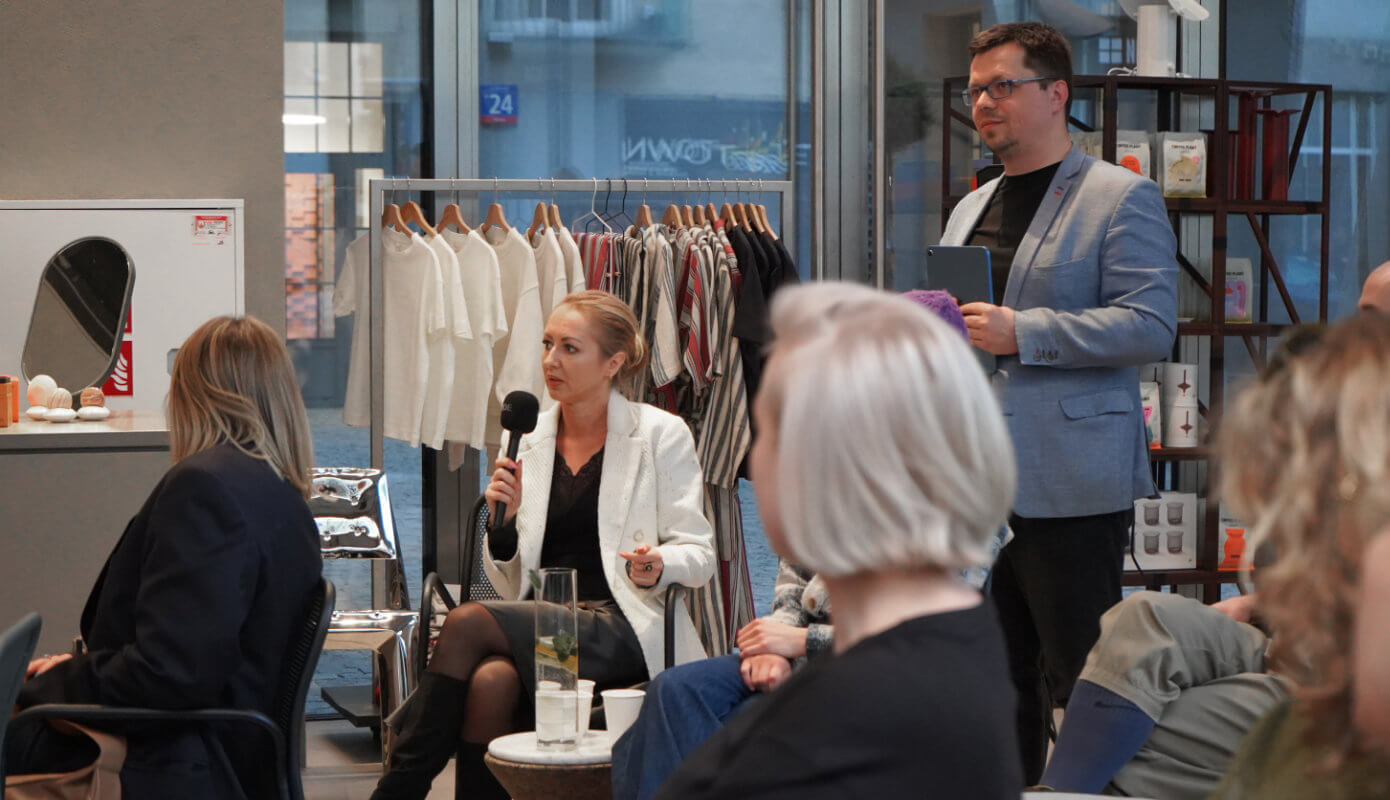
We paused for a moment to reflect on ecology. Marcelina Plichta-Wabnik suggested broadening our approach to art and design by embracing biophilia – creating with nature in mind. In her view, this is a sustainable path to cultivating a refined sense of aesthetics: "As a society, we're in the midst of a learning process. If we surround ourselves with quality, we'll develop the ability to discern and shape shared spaces where we feel good. How do we get there? For me, it starts with biophilic design."
Szymon Wojciechowski echoed this holistic perspective: "I wouldn’t dismiss greenery, just as I wouldn't dismiss graffiti or public participation. Strength and resilience come from diversity - there's no other way."
Tytus Klepacz took a different angle. He believes it's time for urban ceramics and sculpture to take center stage. In cities where concrete too often wins over biophilia, monuments could take on the role of trees – offering shade, shelter, and awe when we look up.
The "f" word
Throughout our conversation, one theme kept resurfacing – the "f" word: finance. Why is commercialization still such a controversial topic in the context of art, even taboo in some creative circles?
Marcelina Plichta-Wabnik and Tytus Klepacz pointed to artists who successfully navigate the space between commerce, art, design and mass culture. One such figure is KAWS – the New York-based artist known for his cartoon-like sculptures. His portfolio includes as many commercial collaborations (with musicians like Kanye West and Pharrell Williams, fashion houses like Dior or Comme des Garçons and more accessible brands like Uniqlo) as gallery exhibitions from America to Australia. While often criticized for being too pop, he's still valued for tapping into contemporary culture - sometimes even compared to Andy Warhol or Keith Haring.
But does the Polish context support this kind of crossover? Szymon Wojciechowski and Marcelina Plichta-Wabnik pointed out the lack of proper education – not just in art schools, but also in design and architecture programs. Business fundamentals are often missing: How to price a project? How to collaborate with investors? How to speak a language that resonates with the business world? These are skills artists and designers usually pick up through experience. Marcelina noted, however, that the ideal setup is one where the artist doesn't have to think in Excel. Instead, they can focus on creativity while a representative or manager handles the commercial side.
Arkadiusz Szwed agreed, sharing insights from his own practice: "I'm living proof that mixing emotion with math can be tough. I know how to make things well – and I work with a demanding material. But to commercialize and sell it, I need a team. And I'm lucky to have one. Talking about money is one thing; telling a story about values is another. Sometimes those two align. Other times... you need to hack the system."
That's exactly what he did in Fuck the Porcelain, a social experiment with his Glitch Lab collective. The group bought third-grade porcelain – factory waste typically ground down to reinforce roads – and intervened artistically. They emblazoned tableware with phrases like "fuck," "big dick energy," and "MILF." The result? "We sold those pieces for much more than first-grade porcelain from the same factory. It took us a while to craft that kind of humor and the story behind it. One that could move people, teach them something, touch a sensitive spot. If we'd covered the whole thing in Excel spreadsheets and looked only through that lens... I'm not sure it would've worked. It might've fallen flat."
Lasting in the canon
Designing spaces and objects also means taking responsibility for their longevity. Artur Celiński posed a question: how does art impact the endurance of a project – and can "beauty" be timeless?
Szymon Wojciechowski emphasized that longevity is a core responsibility for architects: "What we build will – and should, especially for ecological reasons – stay in the public space for decades. We can't follow trends too closely. A building has to survive that tricky 15-year gap where it's no longer fashionable, but not yet vintage." In that light, he sees art as an element that can be swapped or updated – unless it's structurally integrated into the architecture: "That way, a place can remain alive. It can keep showing new voices and adapting to ever-accelerating times."
To close, Szymon quoted Italian architect and Pritzker Prize laureate Renzo Piano: "You can put down a bad book; you can avoid listening to bad music; but you cannot miss the ugly tower block opposite your house." In architecture, then, beauty is best measured in decades – not in seasons.
Creative partnerships
For our event we partnered with Kaspa and COFFEE PLANT – two Polish brands that share our passion for design, conscious action, and the beauty of applied arts.
Kaspa is a brand of unique lighting, designed and made locally. You'll find their pieces not only in design showrooms like our own Wise Habit Concept Store, but also in the collection of the National Museum in Warsaw. The Apolin lamps from the Kaspa by Designers line created by Marta Niemywska-Grynasz and Dawid Grynasz of Grynasz Studio, in collaboration with the Bocheński Foundation – are now part of the permanent Polish Design Gallery exhibition. This collection is a tribute to Polish craftsmanship from the 1950s-1970s. Its name and inspiration come from the modernist table lamp nicknamed "doggy", attributed to Apolinary Jan Gałecki.
COFFEE PLANT, a specialty coffee roastery based in Warsaw, also embraces creative collaborations with Polish designers. Carefully curating the sensory profile of their coffees, they also pay close attention to visual sense – inviting illustrators and designers to create limited-edition packaging. For their sixth birthday, the roastery released a collection of six coffees, each featuring unique artwork by Rafał Mgłosiek, Koka Skowrońska, Zuza Badowska, Mateusz Machalski, Ania Marciniszyn and Angelika Fedorczuk. You'll find some of them in our showroom too!
Wise to create with you
Thank you all for being there with us!
We're happy to co-create a creative community at Wise Habit – a space where diverse voices come together through shared values. It's a joy to witness how new ideas are born, connections formed and partnerships shaped. We're here to support them, co-create them and give them space to grow. Got something in mind? Reach out to us! Thinking about hosting an event, photoshoot or film production with art and design as the backdrop? Check out our offer.
And don't miss the next event in our Design Café series: "Longevity Design: Designing for long and healthy life" – happening on April 10 at 4:00 PM. Sign up and follow our calendar to stay updated on upcoming meetups, exhibitions and growth workshops.