
Sustainability
R for Recycling: the alphabet of sustainable design
Waste as a resource? On World Recycling Day, we take a closer look at the concept of reusing used products and materials, showing how creatively the design world responds to the idea.

Three green arrows arranged in a triangle. The recycling symbol captures its essence – the flow of materials for the benefit of the environment. Recycling is the process of converting what is discarded and unnecessary (household or industrial waste) into valuable resources (plastics, energy, products). If carried out effectively, it helps protect the well-being of people and the planet – reducing the number of garbage, limiting the use of natural resources, minimizing the amount of resources needed to produce goods.
Recycling is one of the basic (though not the most important) tenets of the circular economy, a model of production and consumption in which nothing is wasted and resources are reused to the maximum in a closed loop. The concept is modeled on nature and the natural circulation of matter. In ecosystems, the concept of "waste" does not exist, as raw materials do not lose their importance – they circulate between organisms at different levels of the food chain, only changing form. From the remains, nutrients are created for subsequent generations, and the whole cycle is constantly renewing itself.
Recycling is part of the 3 "R" principle: Reduce, Reuse, and Recycle. It is the foundation of circular actions, formulated in the 1970s by Gaylord Nelson, an American senator and the founder of International Earth Day. This principle is based on a hierarchy (actions are arranged in order of their environmental benefits) and a twofold approach (solutions should be implemented by both individuals and businesses). Today, we expand it with additional "R" concepts, such as Rethink Refuse, and Repair, but recycling remains a key component.
Re-GAIN
For the recycling process to bring real value, it must be well thought out. Effective recovery methods are those that minimize the risk of downcycling – where the processed material ends up being of lower quality than the original. From a circular economy perspective, the most beneficial approach to transforming waste into resources is upcycling – creating higher-quality products without material degradation. It's about giving previously unwanted items a new form and function, allowing them to stay in circulation for longer.
Re-design
In the world of design, recycling is one of the cornerstones of eco-design. It is also a creative and logistical design challenge: on one hand, waste is an easily accessible and inexpensive material, while on the other, the processing of it can be difficult and costly. This starting point opens up space for innovation, technological experiments and work with awareness – both from producers and consumers. The result can be wise, well-designed products that support the balance of both people and the planet.
At Wise Habit, we carefully select products that use recycled materials or are recyclable and we design such products ourselves.
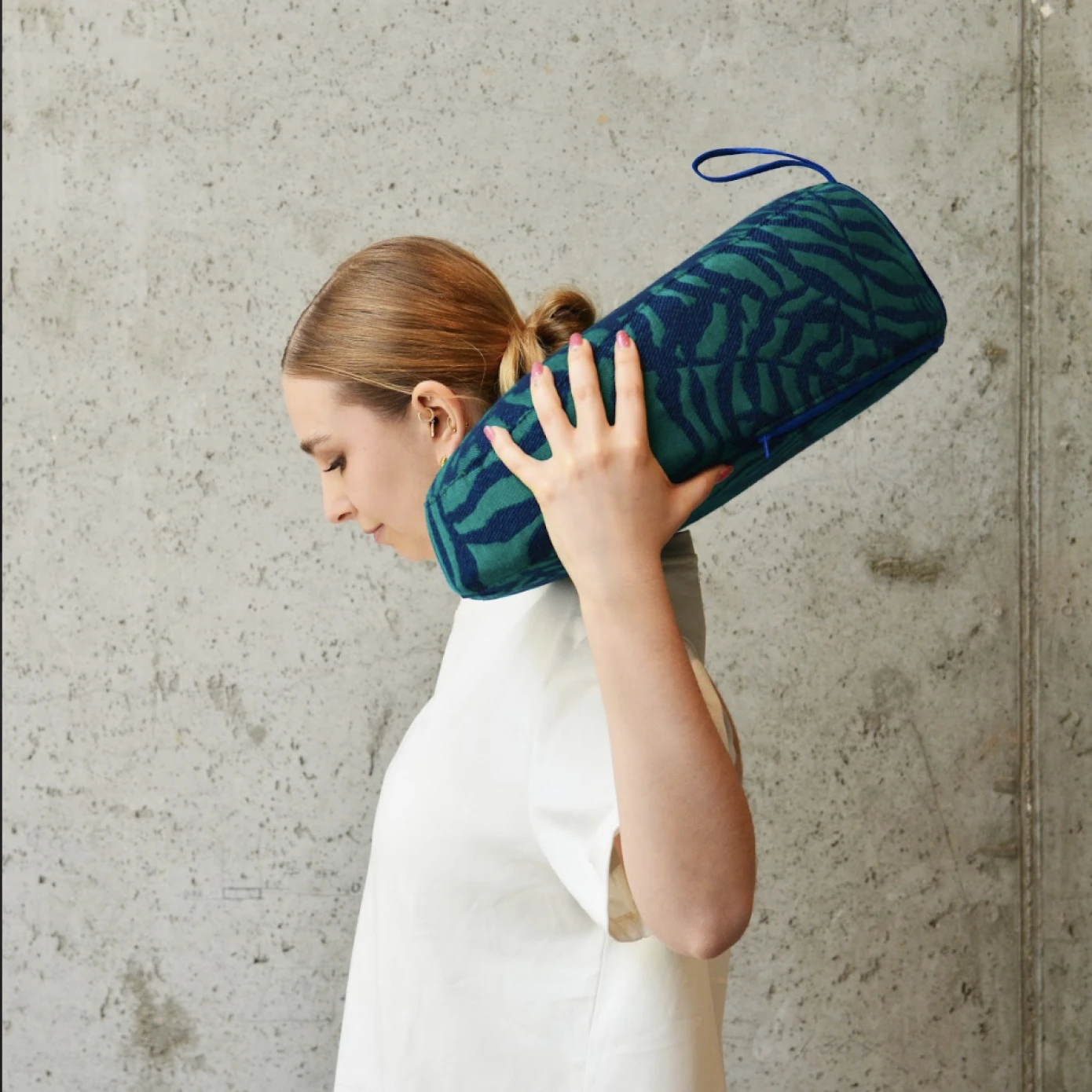
Our own collection of meditation pillows features covers made from 100% recycled ocean plastic. This not only supports the environment but also guarantees durability – the material allows for 100 000 uses without compromising quality. Our approach to reprocessing is also reflected in our Wise Kitchen collection – modular kitchen furniture, which won an IF Design Award in 2024 in the Product Design category. All elements of the system utilize Valchromat® – an innovative, fully recycled material, dyed, glued and impregnated with eco-friendly resins, giving it exceptional durability. This solution is as environmentally-friendly as it is user-friendly.
At our Wise Habit Concept Store, we invite brands that design in a wise and ecological way. Like VANK – a Polish concept of ergonomic furniture and acoustic booths. Their minimalist LORIA chairs are made using recycled materials. Models in the natural color are 50% made from recycled industrial plastic waste and 50% from consumer waste.
Another example of conscious design – even for small everyday items – is Repulp. This French brand creates biodegradable and recyclable cups from citrus fruit and renewable raw materials. Collaborating with local juice producers in the Provence-Alpes-Côte d'Azur region, it uses waste from their production as new raw material.
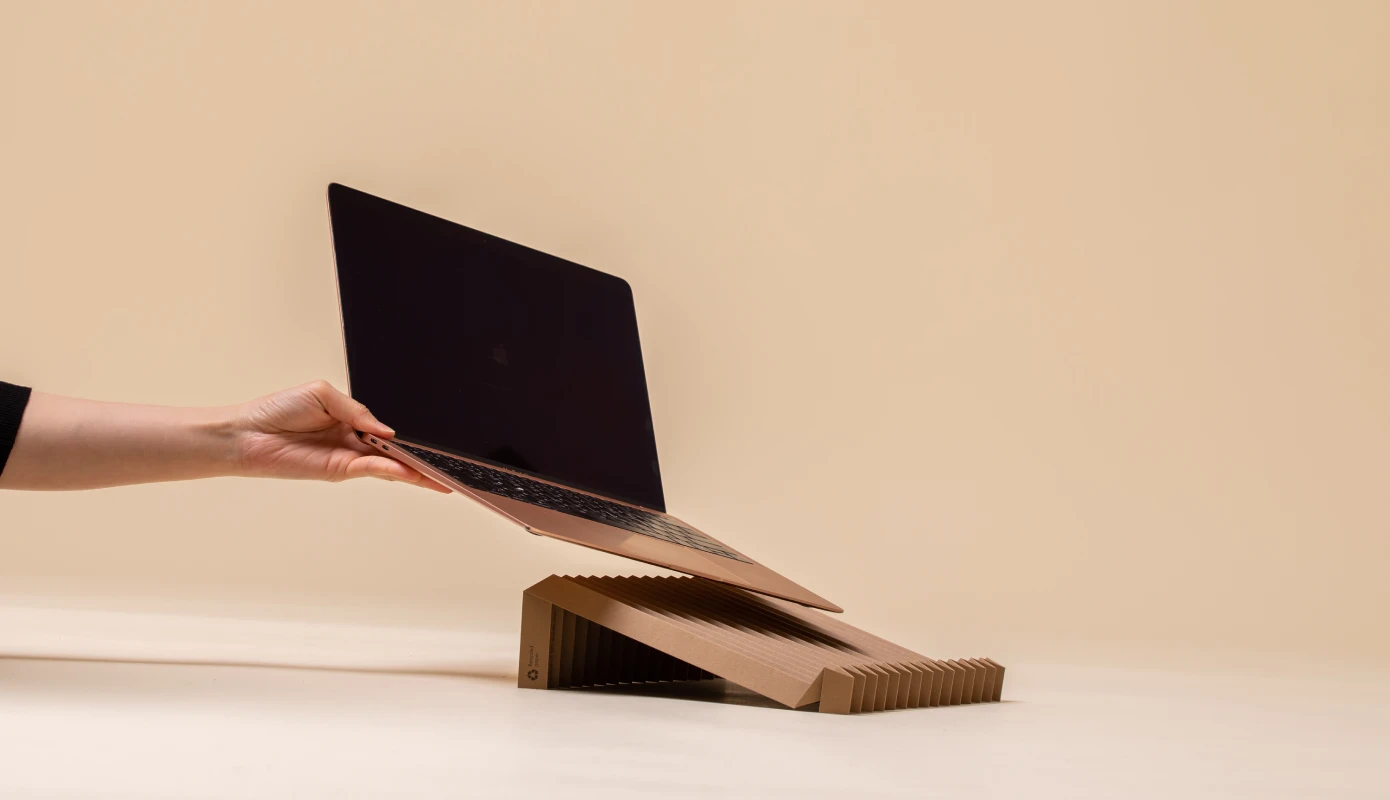
Recycling in innovative design is also reflected in our Wise Write category. It includes, among others, Grape Lab – a Korean design studio that operates on a zero-waste model, focusing on addressing and solving social and environmental issues. Its products have a sustainable life cycle and feature innovative folding techniques. An example? The G.Flow laptop stand made from a single sheet of recycled paper. It is exceptionally lightweight (weighing 45g) yet durable enough to hold even the heaviest laptops.
Nuuna, a German brand of notebooks, calendars, and planners, also creates thoughtful stationery collections. In line with its name (the Latin word "nunna" means "now" or "here and now"), it encourages mindful writing of thoughts and ideas. The paper used in their products comes from certified sustainably managed forests and the unique covers – screen-printed or enhanced with metallic embossing – are made from recycled leather.
We also pay attention to sustainable fashion. In our Wise Fashion category, there is a special RE collection of outdoor sandals by the Japanese brand SUBU. This line of models shares a common theme – Relax, Recycling, Reflection. Each pair is made from around 70% recycled materials. Meanwhile, the Berlin-based brand Ucon Acrobatics creates backpacks, pouches and fanny packs from recycled PET, avoiding the use of heavy metals and harmful substances. It also collaborates with organizations such as PETA and B-Corp to ensure a fully eco-friendly, safe and fair portfolio.
Material loop
We support recycling not only at the product level but also at the material level. That's why we are developing the Library of Sustainable Materials – the first in Poland and third in Europe collection of eco-friendly materials, designed to help designers and architects create planet-friendly products and spaces. We gather alternatives to traditional materials used in architecture, product design, packaging and fashion. These are regenerative, sustainable and often recyclable materials.
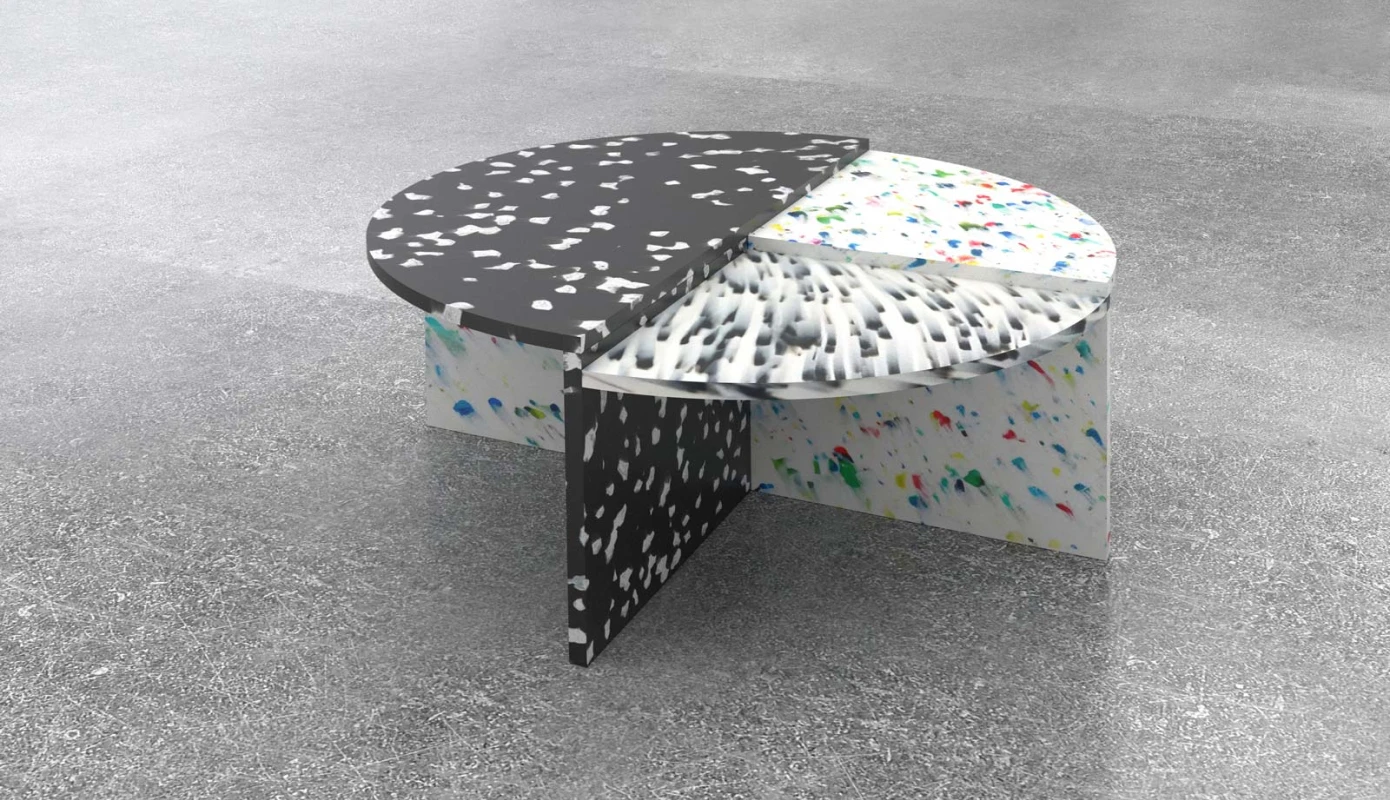
One example is Boomplastic – a Polish creative recycling studio focused on solving the plastic pollution problem. It produces sheets and products made 100% from recycled materials, which are also 100% recyclable. The material is made using both plastic waste and so-called "ghost nets" pulled from the Baltic Sea. Boomplastic products can be used to create furniture boards, structural elements or decorative accents, which can then be recycled again. This is fully circular design.
We make samples of these and other materials available physically in our space at Żelazna 24 in Warsaw, and we plan to launch an online platform. All to help the design industry create projects that support the well-being of both people and the planet.
From oceans to offices
Just like the resource loop, we believe in the loop of ideas. That's why we are building a partnership with the New York-based brand Humanscale – designers of ergonomic, long-lasting office solutions and creators of the most sustainable office chair in the world, made from recycled fishing nets.
For over four decades, Humanscale has been developing innovative solutions and redefining ergonomics in design. What sets the studio apart is its long-standing commitment to sustainability, particularly in the fight against plastic pollution in the oceans.
"In the face of the escalating climate crisis, Humanscale realizes that simply reducing our negative impact is not enough. That's why we are committed to building a better future. In 2023, we achieved a positive climate impact certification for over 70% of our products (by sales), starting to reverse some of the damage done to the Earth." – says Sylwia Goryczka, Country Manager Poland at Humanscale.
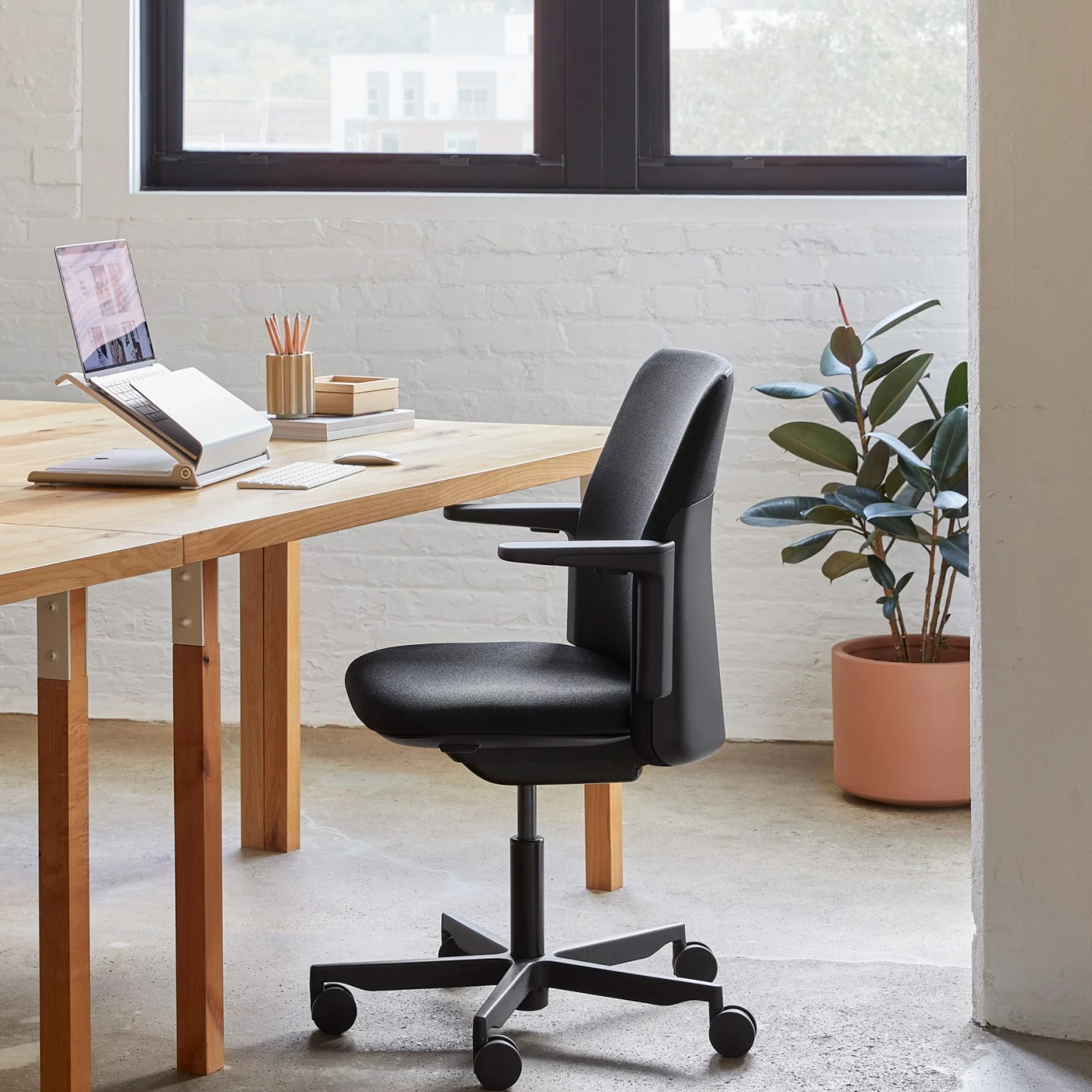
The brand's mission is most fully embodied in the Ocean chair collection, which includes the Smart Ocean, Liberty Ocean and Path models. Developed since 2016, the line uses fishing nets recovered from the ocean – one of the most harmful types of plastic in the oceans, which destroys fragile marine ecosystems and their inhabitants.
As Sylwia Goryczka emphasizes: "These chairs are not only functional but also designed with the future in mind. Path, the latest model in the Ocean collection, sets a new standard for sustainable design. Containing over 4.5 kg of ocean plastic, Path is the most eco-friendly office chair in the world and an excellent example of how sustainability can seamlessly be integrated into high-performance products. With its elegant design and significant use of recycled materials, Path showcases an innovative approach to furniture design, where style, functionality, and environmental responsibility harmonize perfectly."
The Ocean chair collection proves that design can be both beautiful and responsible. We are proud that products from this brand, which sets new standards for the future of sustainable design, will soon be available in the Wise Habit Concept Store.
Be part of the circular change
Join Wise Habit and discover the value of sustainable design. Explore our solutions and realize that the end (of one product's life) can be the beginning (of a new one).