
Design
Let’s produce wiser – highlights from the “Designing for the Future” debate
We are back. On March 26, we launched a new season of our “Designing for the Future” series at Wise Habit – with new topics, a new group of experts and the same drive to ask the questions that matter. To start things off: how can we keep producing things in a world that can no longer afford the old ways?

Future is now
"Designing for the Future" is a series of debates in which we analyze key changes – related to our lives, work, environment and technology – shaping the decades ahead. We invite a diverse range of experts – designers, researchers, artists, futurologists and storytellers – who blend practical approaches with a visionary outlook on the world. Together, we take on the challenge of identifying key issues and answering fundamental questions that will help shape the vision of a better tomorrow. Defying the prevailing culture of immediacy, we pause for reflection, tapping into the power of creativity and imagination to craft future scenarios that transcend current limitations and habits.
The series is held under the patronage of the Polish Creative Industries Development Center (CRPK) – an institution created to strengthen and connect the creative sectors. Much like Wise Habit, CRPK provides space for creators and businesses to grow. We share similar values: while CRPK supports talented Polish artists, designers, innovators and craftsmen in the face of an oversaturated cultural market, we stand behind conscious brands and create our own meaningful products in response to overconsumption.
Value in manufacturing goods
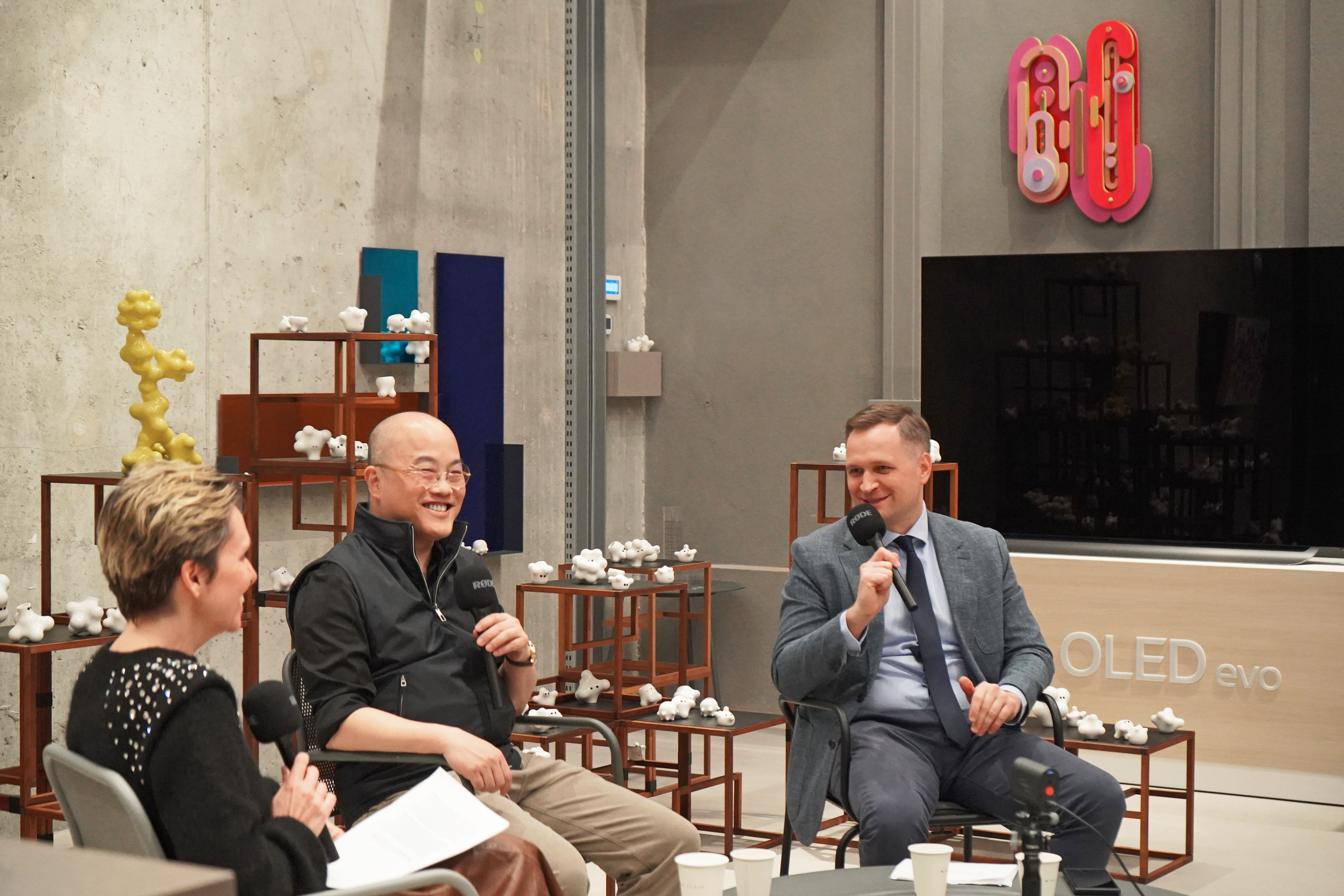
The first 2025 event in our “Designing for the Future” series focused on a topic that is becoming increasingly relevant (not only) in the world of design: the future of manufacturing. Faced with global challenges – from geopolitical shifts to environmental crises – traditional production models are no longer enough. So we set out to explore new approaches: ones that are more responsible, sustainable and attuned to the needs of both people and the planet.
The conversation brought together experts who connected industry and legal perspectives, bridging Asia and Europe. Ken Wong – entrepreneur, innovation leader, and chairman of NKI, a family-owned consortium with a 70-year legacy – shared insights into responsible manufacturing, risk management and building global structures that support sustainability. He drew on his experience managing an international network of factories and his collaboration with Wise Habit, where he supports our mission to create products and solutions that promote holistic health and balance. Wojciech Bagiński – lawyer, partner at Impactiv.Law, and board member of B Lab Global – contributed the legal and strategic lens of sustainable management, showing how responsible business models and legislative change can support companies during times of economic and geopolitical transformation. The discussion was moderated by Marcelina Plichta-Wabnik – CEO of Wise Habit, lecturer at School of Form, strategist and trendsetter – who spoke about inclusivity, adaptability and creativity as answers to the challenges of overproduction.
Our conversation revolved around key questions: What will the manufacturing of tomorrow look like? Will innovation allow us to produce in a more responsible, wise and better way? How to combine the potential of global factories with the strength of local manufacturers? Can sustainable products become a standard rather than a luxury?

Challenges and opportunities
We began by exploring what manufacturing means today – and where it is heading. We opened our conversation with a diagnosis of the current landscape: global tensions, disrupted supply chains, rising tariffs, tightening regulations and the growing pressure to reconcile scale with environmental responsibility.
We dedicated significant attention to the role of regulation – comparing the approaches of the European Union and China, examining similarities and differences, and discussing what lessons can be learned from both when it comes to sustainability. One of the key themes was glocalization – a model that blends local and global resources to build resilient, regional production ecosystems that can operate in synergy with international networks. We also touched on certifications like B Corp as tools for creating more responsible business models. At the center of the conversation was the human element – our role, needs and potential – and the question of whether technologies such as AI can support a more empathetic and sustainable approach to manufacturing, aligned with the vision of Industry 5.0. We reflected on how designers can help reshape consumer habits, promoting durability, repairability and a shift away from a disposable culture.
All of this in order to point our audience toward actions that can be taken now to build a manufacturing of tomorrow that serves people, business and the planet alike.

Trend report – through our lens
In the second part of the event, we took a closer look at the World Manufacturing Foundation’s report: “New Perspectives for the Future of Manufacturing: Outlook 2030”. While its recommendations – such as “embrace change” or “adopt best practices” – offer a high-level direction for the industry, we found them too general to truly guide transformation.
So we took a more critical and hands-on approach – adding concrete examples, practical insights and reflections drawn from our own experience. Ken Wong emphasized the need to build adaptive manufacturing systems and shared risk management strategies for navigating today’s volatile geopolitical climate. Marcelina Plichta-Wabnik highlighted the power of interdisciplinary teams as a source of creativity and innovation, while underlining the importance of inclusivity and international collaboration, above cultural stereotypes. Meanwhile, Wojciech Bagiński pointed out that in times of rapid economic and political change, sustainable practices can offer a real competitive edge – as long as they are intentionally embedded into the core of a business model. This wasn’t just a commentary on the report – it was our way of expanding it with substance, context and the voices of people working in the field.

Sustainability = wise habit
Sustainability was the common thread running through the entire discussion. Each speaker brought their own unique perspective to the table:
Ken Wong:“Consumers are more educated now and increasingly mindful of how they spend their money. It’s no longer just about making things cheap, but about making them meaningful. In response, companies and individuals alike need to adapt to the thought that we are striving to live in a sustainable world – and that this must become a shared understanding. Education will change over time, but the real challenge is: how do we transform sustainability from a task into a habit – a wise habit? How do we embed it deeply into people’s minds?”
Wojciech Bagiński: “I am quite certain that today’s and tomorrow’s manufacturing has to start changing in accordance with sustainability practices, because the world is heading that way. I strongly believe that price competition won’t be the name of the game in the future. There is a next stage of doing business – price is one factor, growth has its limits and beyond that lies true competitive advantage. When I look at B Corp companies, I see that they’re not competing on price, but on who creates a greater positive impact.”
Marcelina Plichta-Wabnik: “If we can design manufacturing systems that are easily adaptable to different types of products and needs, the result will be more sustainable. Another important aspect is how we design and engineer the products themselves. They should be created in a way that ensures repeatability – so that we can use the same components across many different products. This way, we solve it once, rather than for each individual product. It makes production not only cheaper, but also more planet-friendly. I believe personalization should be a luxury – not sustainability.”

Watch the full conversation and help us design the future
Thank you to everyone who joined us – for showing up, asking insightful questions and sparking international conversations that continued long after the panel ended.
You can now watch the full discussion on our YouTube channel.
We will be back on April 23 at 7:00 PM for the next event in the “Designing for the Future” series – this time, we’ll dive into the future of education. Reserve your spot and find out how we can create new models of education that shape not only professionals, but also mindful human beings ready to wisely transform our reality.
Wise to be here – these conversations are shaping the future.